Faruq
Senior Full Stack Developer
Insights | Business
8 December 2025
Another year has flown by and, in what seems to be d&f tradition, I asked the team for their hot trends, predictions and general thoughts on what next year could bring.
So let’s get into it...
The stars seem to be aligning for AI in 2026. Whether or not the 'bubble pops' is largely irrelevant, as the real race is to be the first to go beyond the agentic AI we've seen in 2025 and into full-on superintelligence.
Why is it so important to be first? Why is the world's capital flowing into a handful of companies clutching thousands of nVidia chips and gobbling up electricity and water like there's no tomorrow? It's because the widespread belief is that once someone births the world's first superintelligence, it will be that entity itself that births the second.
And then the world is changed forever.
So what does this mean for creative agencies? Well, we've seen AI do incredible things to help us work faster and smarter. Whether it's in retouching a photograph, turning ideas for a piece of content into reality, or undertaking a complex audit of how AI and the World Wide Web talk to each other (now and will do in the future), it has all been positive in this space. So far.
What does seem to be changing is that those basic tasks for lower value 'brands,' usually name ideas and a logo, are starting to be done using AI. We know the content industry has been flipped on its head, but full scale design has only been nibbled around the edges as AI tools struggle to understand context and harness true creativity (or something convincing enough to pass for it). Some coding work is being challenged by vibe coding, but even here, in our world it's far more useful for prototyping and concept work than it is for production pieces - especially when we specialise in efficient, disciplined programming that's rooted in a deep understanding how computers work.
In 2026 there's a fair chance, perhaps as much as 50/50, that we'll see our first significant piece of billable work emulated by AI. If this does happen, we will pivot, and we're better placed than most to pivot to new opportunities due to our team, structure and capital position, but it may signal that, longer term, our industry will be experiencing a more significant and fundamental change.
Is your website powered by sustainable energy? For most businesses, the answer is no, and that’s why everyone’s talking about it.
Many hosting companies still don’t offer sustainable energy options, running an environmentally responsible website isn’t always easy. There are greener choices available, like renewable-energy hosting and low-energy data centers, but they take some finding. We’re transitioning to different hosting providers to ensure we deliver a more sustainable service.
Designing websites with sustainability at the forefront is also increasingly important. Performance optimisation, image compression, efficient file formats, and avoiding bloated frameworks supported by a distributed CDN, significantly reduce data transfer and energy usage. Leveraging headless and serverless architectures (as I highlighted in last year’s hotness topics) further decreases the energy footprint of your website.
2026 marks the rise of truly sustainable websites!
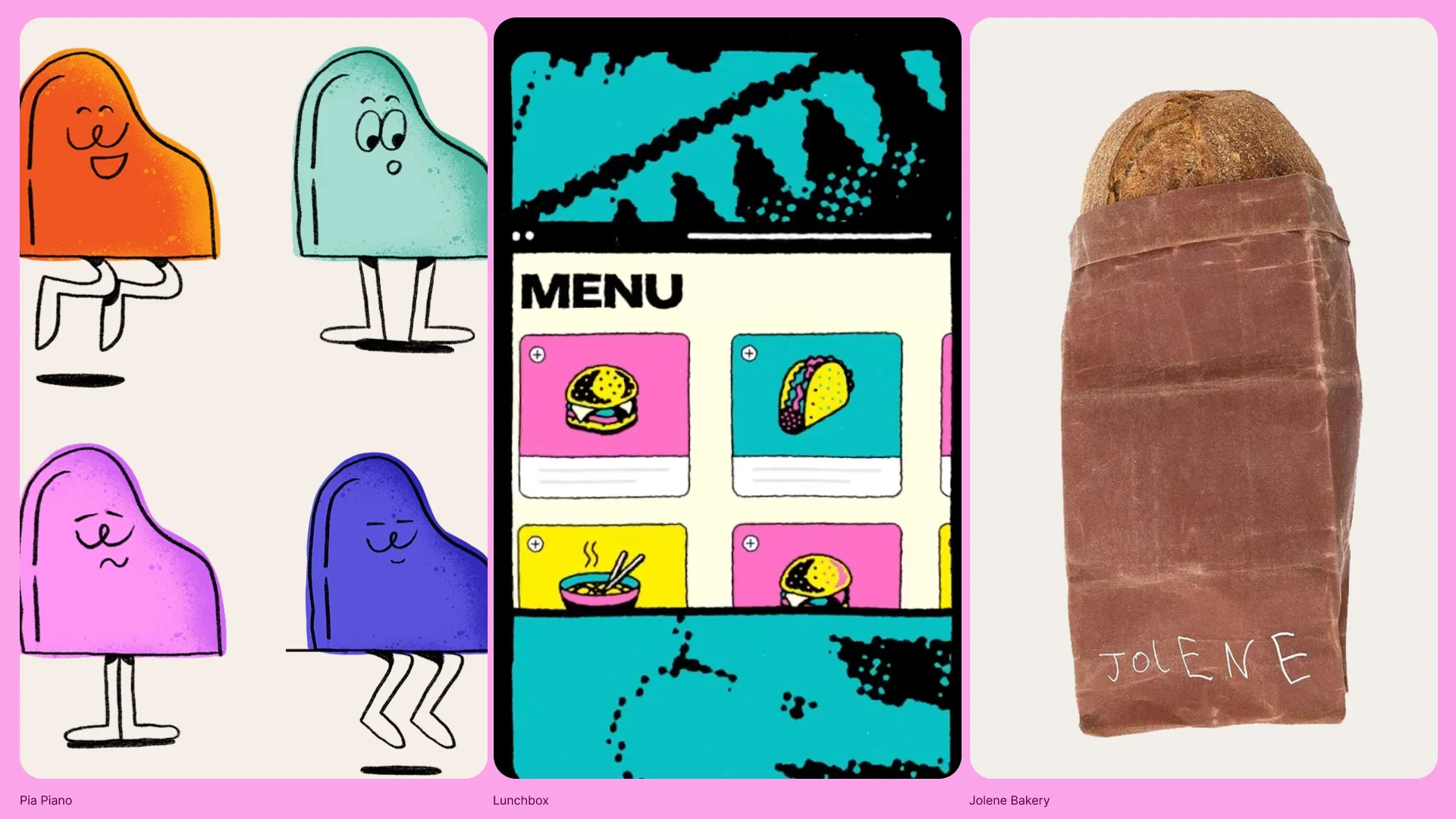
There is a need for human connection that will always be with us. Life is messy, loud and unpredictable. After years of embracing minimalistic, clean and streamlined aesthetics, we are going to see a rise in tactile, rough and the intentional imperfections that makes a brand feel hand crafted.
Brands will embrace their unique personalities and be creative in expressing themselves. Look out for clashing colors, grain texture, playful expressive type, hand-drawn illustrations, collage-style layouts and motion that feels alive.
Celebrating the imperfections and the happy mistakes that make products feel human, approachable and unique.
AI exponentially grew in 2025 and took over everything. As we approach 2026, I believe this will progressively disappear into production systems where it quietly runs real operations, support, security, testing, judging on reliability and productivity instead of exposure.
Alongside this, cost-aware compute that performs sustainably will become more and more key as cloud bills, ESG (Environment, Social and Governance) pressure, and AI energy use increases, “efficient by design” architectures - smaller models, smarter scheduling, and greener infrastructure could all turn into key competitive selling points for servers.
In terms of Software development, we could see more small, local, and domain-tuned models sitting inside toolchains (etc, pipelines, rather than used as a separate service) for speed, privacy, and reliability. Instead of sending and receiving every signal to the main SaaS model, the team will run specialised models that understand their codebase, stack, and standards. This should result in faster feedback on PR’s (Pull Requests), security issues, accessibility, performance, all without leaking IP. Changing AI as external helpers into an in-house capability.
2025 felt like the year of existential scare for software engineers, almost like we had used our own knowledge and skills to create the very thing that would consume us. It had the energy of a sci-fi film where the scientists build the perfect machine, only to watch it turn back on its creators. Or like a crocodile slowly biting its own tail, unaware it is consuming itself.
Every major CEO amplified that fear. Their reach is wide, and their messaging was loud: AI is coming for your job. But to be fair, companies act in their best financial interest. The fear of falling behind a competitor is real, and everyone wants to chase the shiny new tool that might make them the dominant force in the market.
But just like every supposedly industry-destroying technology before it, the panic eventually settled. The bubble did not burst, but it deflated to reality.
Do not get me wrong, AI is not going anywhere. Unlike past trends that were marketed as the end of software engineering, AI is here to stay. It has become deeply woven into our day-to-day work and lives.
And I am not pretending to be above it. I am definitely going to run this text through ChatGPT once I am done writing. That alone says a lot about how AI has reshaped our workflow. Tools like Cursor and GitHub Copilot are now part of my daily routine, and the speed at which they help you build is genuinely impressive.
But here is the truth: AI still cannot replace critical thinking, not now and not in the foreseeable future.
If you do not know what you are doing, AI will only help you make mistakes faster. But in the hands of someone skilled, it becomes a super-assistant, unlocking a completely new level of productivity. That is why I see AI not as the destroyer of software engineers, but as a force multiplier.
So going into 2026, my prediction remains simple: AI will not replace software engineers. Software engineers who know how to use AI will replace those who do not.
And with great power comes great responsibility. We have already seen how dangerous AI can be in the wrong hands: misinformation, deepfakes, automated attacks. Regulation needs to catch up fast to ensure this technology is used ethically and safely.
But the future is not doom. It is collaboration.
2026 will not be the year AI replaces us. It will be the year we continue learning how to work with it better.
'2026 will not be the year AI replaces us. It will be the year we...work with it better.'
Senior Full Stack Developer
We’re entering a moment where a brand isn’t something you simply see, it’s something you experience. It lives in every interaction. The feel of a product, the atmosphere of a space, the rhythm of a sound, the subtle cues in a digital interface. Brands now span physical, virtual, and sensory worlds simultaneously. And yet, most branding systems were designed for a far simpler reality. Static guidelines with rigid asset libraries and linear processes.
None of that can keep up with how brands need to show up today. The truth is brands must evolve from fixed identities into flexible ecosystems. Ecosystems that can adapt, respond, and behave more like living organisms than visual artifacts. Ready to flex and adapt to the changing tides of the branding landscape. To build for this new world, rethinking the fundamentals is key. How a brand is designed, how it forms emotional connections and is sustainable and how technology amplifies every touchpoint.
Prioritising efficiency is something we will see more of. By integrating automation, new tools, and intelligent AI partners we’re clearing away the busywork. That gives us more space for strategy, for imagination for craftsmanship, the things that truly differentiate a brand. At the same time, expectations are rising. Organisations want brands that feel dimensional and intentional, not just polished. They want to know how a brand acts, how it speaks, how it behaves across environments, not just how it appears in a brand guidelines PDF.
The key assets of the future brand will be a lot more dynamic, including generative logos and flexible colour palettes, variable type. Interactive elements like custom illustrations, photography, and artist-created visuals will be adapted to fit whatever context they’re used in. As brands step into more immersive spaces things like motion graphics, video, AR/VR experiences, and 3D assets will play a much bigger role, making static pdf’s feel pretty outdated. But despite all this technological innovation, it’s human design and craftsmanship that will continue to pulse at the core of every great brand.
2025 has seen AI officially infiltrate our everyday lives. It’s all over my social feed; from bunnies jumping on a trampoline to the Pope in a Balenciaga puffer coat. And with tools such as Gemini and Sora so readily accessible, it means absolutely anyone can deep fake their own videos and images super quickly just from their phones.
Chat GPT can throw out creative copy, logos and illustrations in a matter of minutes, even Adobe and Figma have tools integrated now that can spit out a design in seconds (as long as you get the prompts correct!).
Are these to the same standard as a trained designer? No, of course not. Mostly the AI generated trash is quite easy to spot, a lion crashes through a window but then dissolves into the wall, an ai generated person has 7 fingers and no ears, AI copy uses multiple unnecessary em dashes.
Sure, it’s fun to use for a quick laugh, but it shouldn’t replace designers and copywriters with years of training and experience. This is where I think we’re going to start seeing a push back in 2026, as well as more rules around using AI in businesses. I think people will want to see more of the handmade, the crafted and the imperfections.
The thought process behind an entire campaign can’t yet be replicated by AI; humans excel at the story telling and can inject way more emotional relevance than a robot currently can. Apple TV recently unveiled their new animated logo, which instead of being computer generated, was actually slowly shot by human creative in a studio. I think a lot of brands will start following the trend and will be celebrating the many human skills used in creating their campaigns and branding.
On a personal level, my 2026 is going to be very much human based, as I’ll be signing off soon for maternity leave. What the world will look like when my daughter grows up, who knows, but I hope she still has the pleasures of crafting by hand, making happy mistakes and learning from them rather than the quick fix AI can give. (Also, secretly hoping being a mum is also a hot trend for 2026!!).
*No AI was used in the writing of this article.. ;)
After 20 years in marketing, I’ve never seen a shift hit as fast as AI. Don't get me wrong, I love AI, it saves me so much time, but.. on the flip side, I have never seen so much lazy marketing content.
2025 has been wild.. generic LinkedIn posts, bland AI-written blogs, brands sounding identical… the rise of 'AI sludge' and it’s quietly damaging the our (and your!) credibility.
The problem isn’t the technology. It’s the belief that AI can replace thought, judgment, and brand stewardship and personality.
Yes, AI accelerates production, but it also flattens 'the difference'. If every brand uses it without care, everything starts to sound the same. Yeah it’s polished, grammar checked, polite, but it’s completely forgettable. And when distinctiveness disappears, so does trust. Your voice becomes noise. You customers zone out.
So here’s the real future of content in 2026: Marketers must become editors-in-chief. Channel your inner Miranda Priestly and get to work!
Use AI like you’d use Figma or HubSpot, as a tool for speed, structure and ideas. But the thinking, tone, spirit and point of view must come from you. Guide it. Let it inspire you, but don’t hand it over to a model trained on everyone else’s voice.
Because marketing still has one job in 2026: make your brand memorable. AI won’t do that for you. But used wisely, with real human sense and a bit of your own personality, you can work all sorts of content magic ✨
There's been a quiet but rapid movement toward a more environmentally conscious internet, and I expect this to accelerate throughout 2026.
Many cloud hosting providers now offer services powered entirely by renewable energy. At the same time, the rise of headless architectures means that traditionally power-hungry physical and virtual servers are being replaced with far more efficient serverless alternatives.
We’re likely to see the emergence of small decentralised data centres that capture and reuse their waste heat to warm homes and businesses, there are already ongoing trials of this which are showing promise. This is a great way of using excess heat which would otherwise be just vented into the air.
We should also start to see clearer statistics on A.I. resource consumption, giving individuals and organisations the information they need to make more informed decisions about their environmental footprint.
That's a wrap for next year's predictions, we'll have to wait to see what 2026 brings!
Happy New Year!