Insights | Business
Hours are the wrong unit
15 September 2026
Insights | Branding
23 September 2026

A city in the end is not made of roads and buildings and grid references. It is a living accumulation of stories, sounds and textures, the kind of thing no map can hold, only a body walking through it. That accumulation and the attachment it produces is what we mean by a sense of place. Few cities argue the case for it more persuasively than Canterbury. It has never needed to market itself to the people who pass through. Its identity has simply lodged itself further in, past the postcards, somewhere it is still being carried by people who have never set foot here. What follows is an account of how that happens, how a set of coordinates on a map becomes something a person keeps.
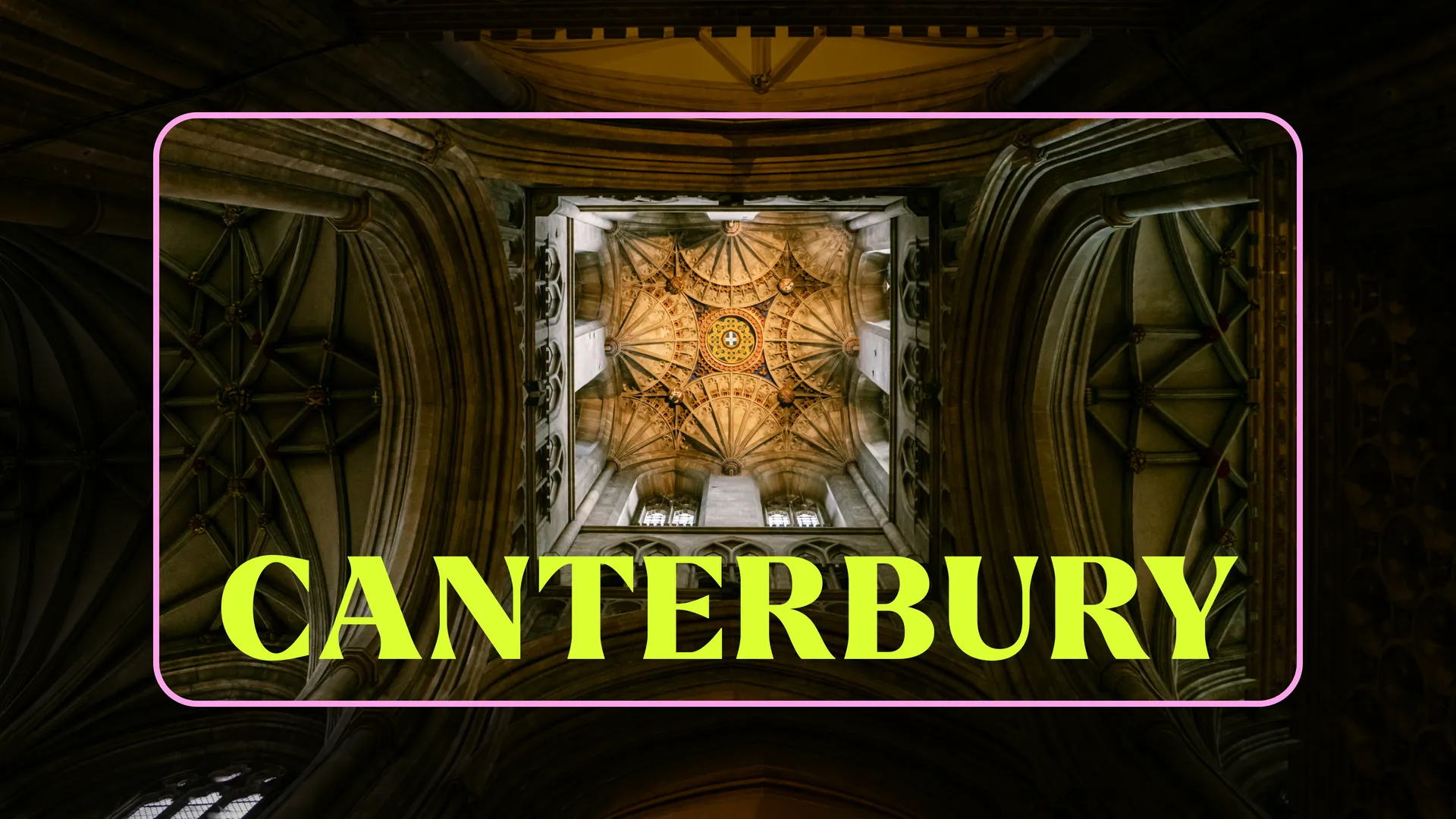
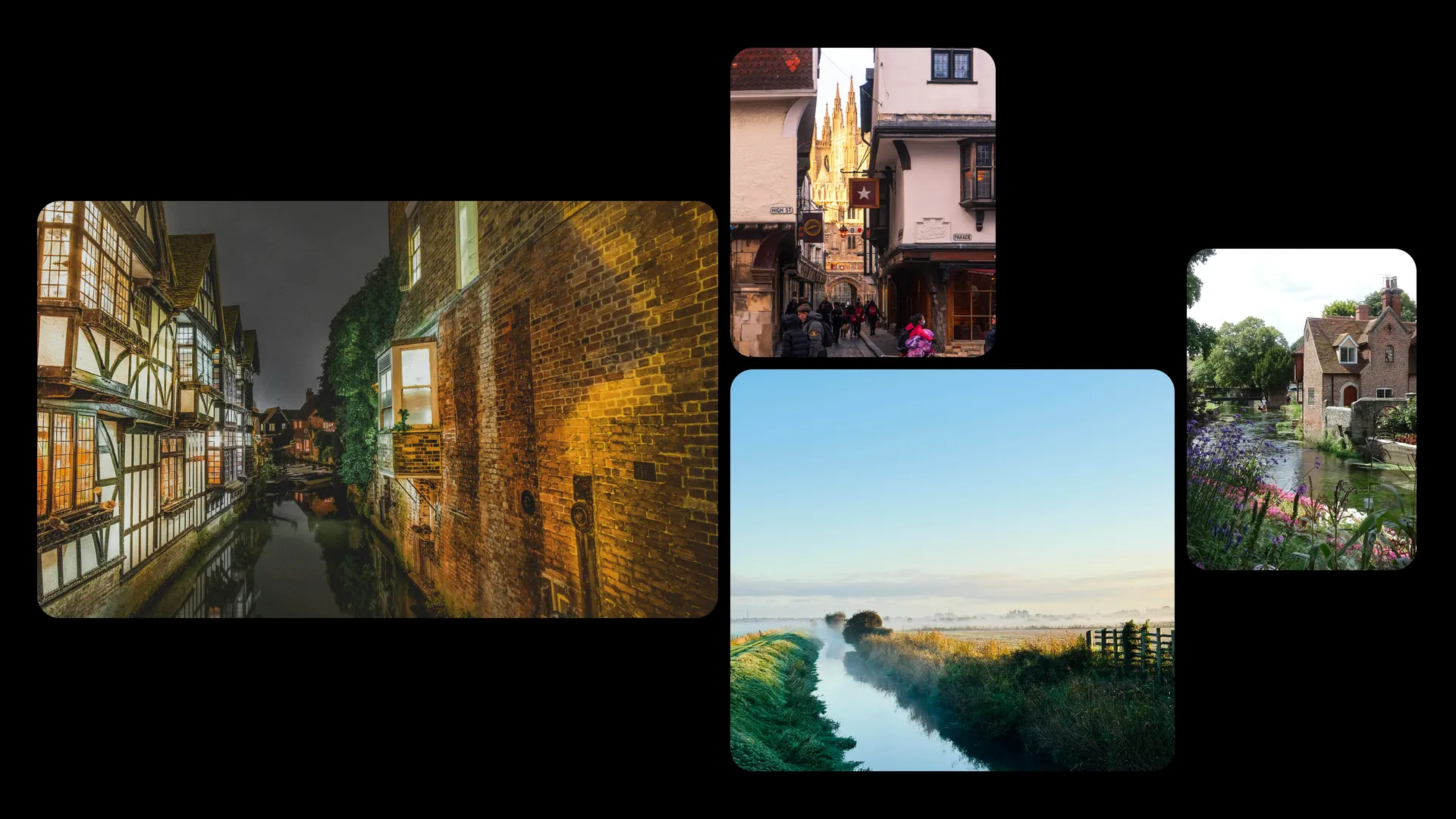
Approach Canterbury from the north and the land tells you where you are before the road signs do. The North Downs rise in long chalk swells, cut through by the Stour narrow enough to duck under willow branches, old enough to have carried pilgrims' barges. Chalk is the region's grammar, in the downland's bones, in the flint that studs the city walls, in the pale light over the Cathedral close. Colour, form, texture, the first cues any place offers, are visual, and Canterbury offers them freely, flint-grey, black timber, a massive yew with a gnarled trunk and a broad canopy that casts dense, heavy shade across the Cathedral precincts.
Walk further in and the cues turn from seen to spoken. The streets still carry their working names: Mercery Lane, where the cloth-sellers stood. Butchery Lane, blunt about what once happened there. Nobody invented these names to tell a story, they simply recorded one, and the honesty has outlasted every fashion since. A brand's verbal cues are answering the same question these lanes answer at every corner. What is this called and why?
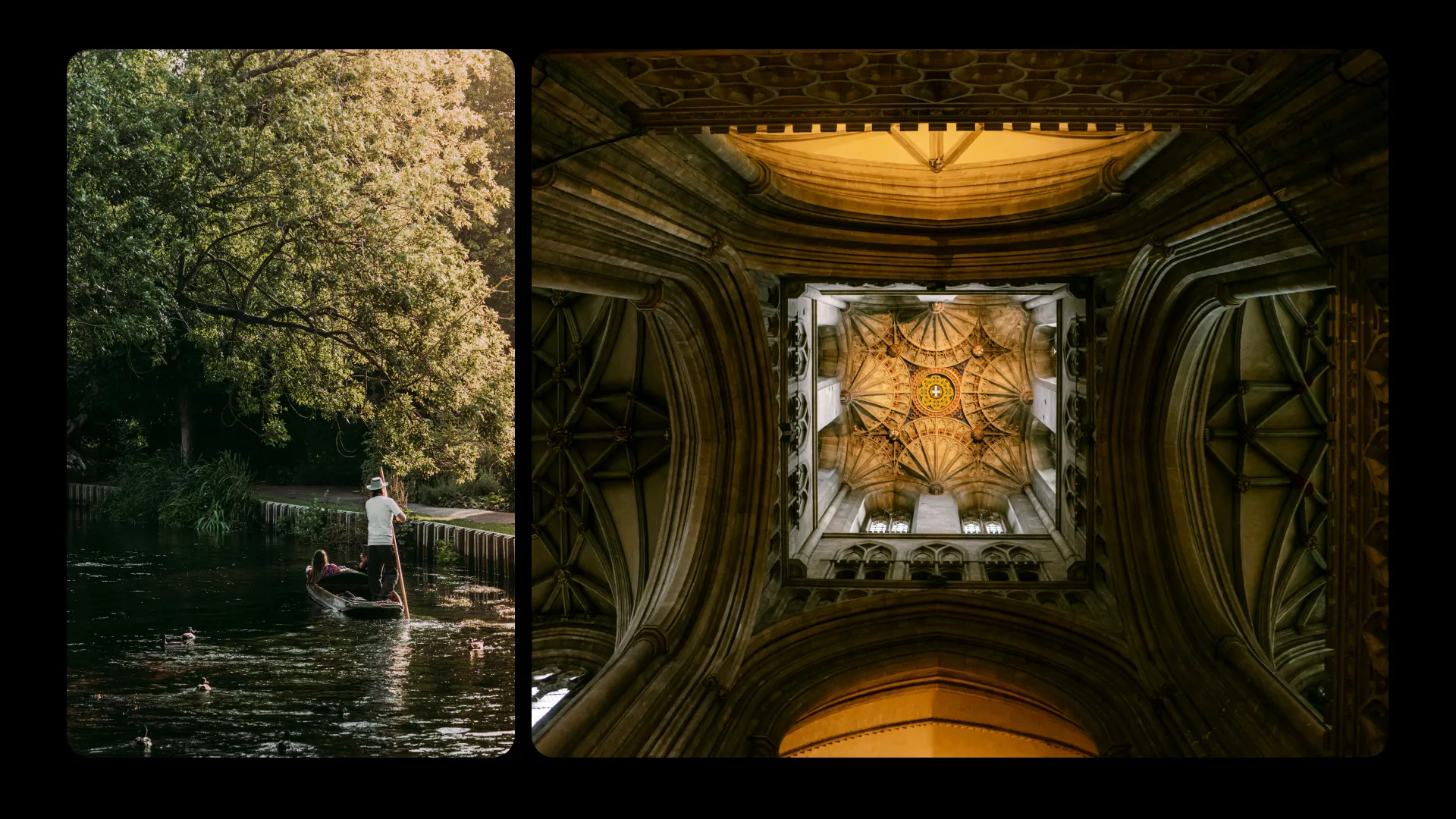
Then the ear takes over and the fuller sense of the place arrives, not one signal but the sum of all of them, felt at once. The Cathedral bells roll out over gulls in from the coast, over the everyday murmur and feet on worn stone. Flint is cold and damp even in summer, old oak doors carry a weight you feel through the handle before you push. Experience at ground level is never a single mark. It is the whole holistic weather of a place, good notes and bad held together, and it is this, not the logo, that a person carries away.
Beneath all this runs an older cue still, the route itself and who walked it together. Chaucer's pilgrims came for the shrine of the martyr along a road with narrowed streets that funnelled the crowd toward the gate, saving the Cathedral's full height for the moment they were nearly upon it. That is a customer journey by any other name, laid out eight centuries before anyone used the phrase. But the pilgrimage was never a private transaction between traveller and building; it was strangers converging on the same worn stones, telling each other stories along the way. Places are for people before they are for marks. A well-cut sign draws a pilgrim to the gate, it is the company on the road that sends them home changed. Design and branding at their best are acts of pilgrimage in miniature, attentive, slow, willing to be shaped by what they pass through. In Canterbury, where the chalk is never far from the surface and the river still remembers its old course through the city, it is moving with the grain of the place and not against it.
And finally, there are the associations a place accrues. Chaucer, Becket, the institutes of learning folding new makers into an old town. Canterbury has never tried to be everything to everyone; it has stayed itself and that refusal to dilute is what has kept people arriving for eight hundred years. A brand borrows credibility the way a building borrows flint from one demolished nearby, honestly without pretending to be a material it isn't.
Robert Macfarlane calls this "the eloquence of matter," the way materials given attention and tell you what they want to become. Roger Deakin also said a house should grow out of its ground the way a tree does. Good place branding applies that principle with intent, cues drawn from what is actually underfoot, an experience weighed whole rather than reduced to a mark, an identity porous enough to keep being shaped by the people who pass through it, rather than fixed once and defended forever. The sense of place isn't a mood board, and it was never finished by whoever first drew it. It's underfoot, in the stone, and in the company on the road still being written by whoever walks it next.
If your brand is rooted in something worth understanding, in its materials, history, and the people who move through it, then that’s the kind of work we love to do. Get in touch.