Insights | Branding
What the stone remembers: A sense of place in Canterbury
23 September 2026
Insights | Business
6 October 2026
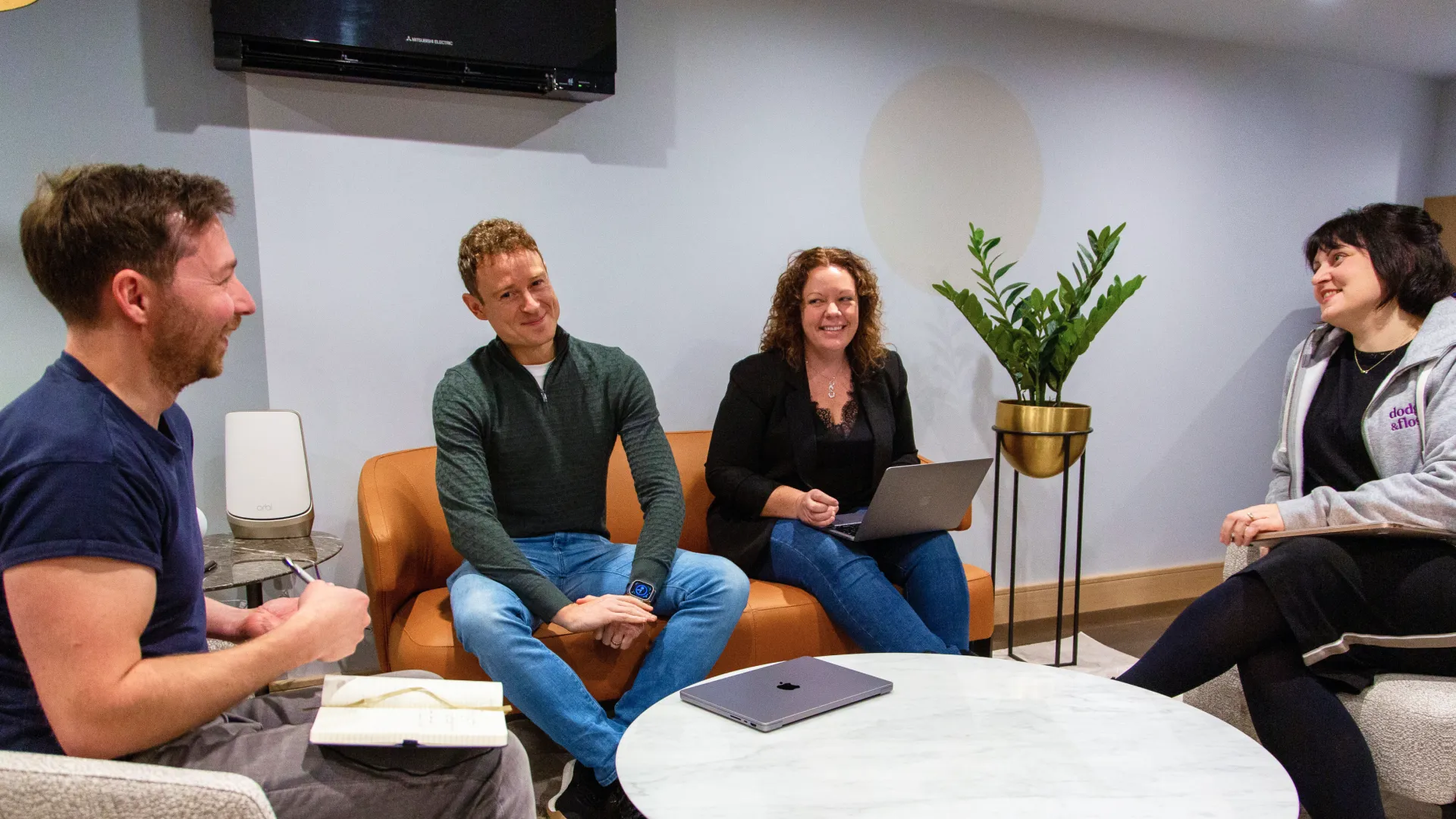
You need brand work, digital work, and a clear-eyed take on AI. The question isn’t whether you need that capability; it’s how you staff it. There are three obvious ways… but none of them quite work.
Hiring a brand lead, a couple of designers, and someone who can ship digital is expensive. Hiring someone who can do all of that and credibly hold a view on AI is harder still. What you usually end up with is a small in-house team plus a stack of external suppliers, and a marketing director whose week is half-spent on coordination tax. The capability exists, sort of, but you’re paying for it twice; once in salary, once in your own time.
The bigger the agency, the more of your fee goes on layers you can’t see. Account directors, planners, traffic managers, a wedge of overhead. The senior people you signed up to work with are on the slide deck and rarely on your work. The team that actually delivers tends to rotate. Continuity erodes. You’re paying a premium for a brand name and a system that wasn’t designed for how creative work actually moves now.
This works for one project. It works less well for three running in parallel. Each freelancer needs onboarding. Each project needs a producer. Quality varies, tone drifts, and nobody’s holding the long arc of your brand. The economics look good on a spreadsheet and bad in practice once you count the hours you spend stitching it together.
A fractional creative agency is a small senior team you embed with for a defined slice of their week, every week. Not a project shop. Not a placement. A team that knows your brand, your stakeholders and your roadmap, and that you can scale up for a launch or down between them.
The argument that wins this for me isn’t cost, though the cost works. It’s breadth. The reason a CMO ends up coordinating five suppliers is that no single supplier covers Brand and Digital and AI to a standard you’d actually trust. A fractional team built to span all three replaces the coordination overhead with a single relationship; one that holds your brand in its head, ships across disciplines, and treats AI as part of the practice rather than a service line you have to negotiate separately.
That’s the real unlock. Not ‘cheaper agency’. Not ‘flexible freelancers’. A team whose shape matches the actual shape of modern brand and digital work, and which doesn’t make you the integration layer.

You get a fractional strategic lead who’s accountable for the output. You get the right specialists plugged in as the work demands. The relationship runs on a monthly cadence; what you spend is predictable, what you get is reliably senior, and what you don’t pay for is a building full of people you’ll never meet.
The model isn’t new. Senior people have been working this way with smart clients for years. What’s new is that the disciplines have converged enough, and AI has compressed enough of the input variability, that a small fractional team can now hold the same surface area a big agency used to.
The shape of creative work has changed. Isn’t it time to change the way you buy it?